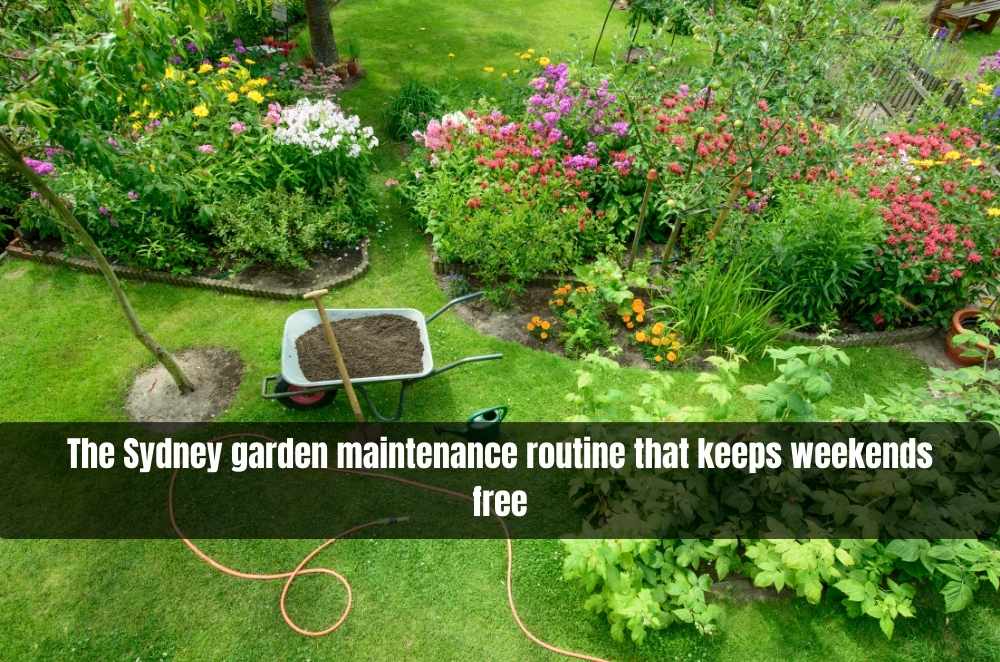
A garden that looks “sorted” most of the time is rarely the result of one heroic weekend. It’s usually a small, repeatable system that keeps borders sharp, growth predictable, and mess from piling up.
Sydney’s warm spells and sudden rain can make the yard look like it “blew out overnight”, so the goal isn’t perfection. The goal is control: you can walk out the door without immediately spotting five things that need fixing.
What “under control” actually means
Most gardens look tidy when four cues stay consistent: edges are defined, plants aren’t swallowing paths, loose debris is cleared, and soil isn’t left bare for weeds to claim.
Before touching a tool, look at the garden from three places: the driveway, the front path, and the main view from inside. If it reads tidy from there, it usually feels tidy everywhere else.
“Under control” also means resisting the urge to hack everything back whenever it annoys you. Hard pruning at the wrong time often triggers fast, messy regrowth and turns next month into another catch-up job.
The simple system: Monthly basics + seasonal resets
If you want the garden to feel easier, build a rhythm that’s smaller than your motivation. Think short sessions that you can actually repeat.
Monthly basics (split into quick sessions)
Edges and borders: re-cut lawn edges, scrape back runners, and keep bed lines obvious.
Weeds before they seed: after rain, pull the small ones first, then hunt anything flowering or about to seed.
Light pruning (not a haircut): remove dead, crossing, or crowding growth so plants keep shape and airflow.
Five-minute clean-up: pick up cuttings, fallen branches, and leaf build-up in corners where it turns slimy.
Seasonal resets (every 3–4 months)
Resets are the “back to baseline” sessions that stop the monthly jobs from slowly getting heavier.
shape hedges and shrubs (timed to the plant)
top up mulch and level beds
remove green waste properly
patch lawn wear and thin spots
check drainage around paths and downpipes
check drippers and hoses for leaks or dead spots
Common mistakes that waste time (and money)
People often start deep in the garden bed, then run out of steam before they fix the parts everyone sees. Do edges and visible clutter first, because that’s what changes the whole look fastest—then, if you need an affordable local gardener, you can tackle the deeper beds once the front-facing areas are under control.
Mulch is another classic trap: it’s brilliant after weeding and loosening compacted soil, but it’s not a cover-up for problems underneath.
Pruning everything “evenly” can backfire. Some plants want a thin-out, others want a timed cut, and some mostly want you to step away.
If green waste isn’t planned, the job isn’t planned. Piles become projects, and projects become the new normal.
Decision factors: DIY vs outsourcing (without paying twice)
Start by describing the outcome, not a vague list of tasks. A useful scope sounds like: “beds weeded back to visible soil, shrubs shaped (not scalped), edges crisp, and waste removed”.
Then choose a rhythm that matches growth: monthly for fast lawns and high-traffic entries, every 6–8 weeks once things stabilise, or a quarterly reset only if borders and weeds genuinely stay calm between visits.
Before anyone starts, confirm these three practicals: access (stairs/narrow side paths), green waste handling, and what’s not included. Those are the details that blow out time and cost.
If the next step is putting your scope in plain English, the A Bargain Gardener service guide is a helpful reference for the questions to ask and the “done looks like” details to confirm.
Finally, agree on limits. Lowering an old hedge too far can leave it thin for a season, and some reshaping is better staged over two or three visits than forced into one.
A simple 7–14 day plan to regain control
You don’t need a free weekend; you need a sequence that creates momentum.
Days 1–2: take three photos (front boundary, entry, main backyard view) and circle what looks messy.
Days 3–4: fix edges first; stop once borders look sharp, even if you haven’t touched the beds yet.
Days 5–7: remove anything flowering or seeding; pick one bed and finish it.
Days 8–10: clear debris and decide waste removal (bag, bundle, bin, or book removal).
Days 11–14: do one targeted prune and top up mulch in the bed you cleared.
If time is tight, do edges and waste removal, then leave pruning for a calmer week.
Operator Experience Moment
Most “overgrown” gardens aren’t out of control everywhere at once. They’re out of control in the sightlines: drifting borders and leftover cuttings. Fix those two, and the remaining work becomes obvious, smaller, and far less daunting.
Local SMB mini-walkthrough (Sydney)
A small clinic courtyard usually has tight access and high visibility from the footpath.
Clear the entry line first, including leaf litter that stays damp after rain.
Trim back anything blocking signage, lighting, or paths.
Reset borders so planters and paving look deliberate.
Top up mulch lightly so weeds slow down without smothering plants.
Set a rhythm that avoids “rescue tidy-ups” before a busy week.
Practical opinions
Edges beat extra pruning for visual impact.
Quarterly resets work only if monthly basics still happen.
If waste isn’t planned, the job isn’t planned.
Key Takeaways
Define the result (what “done” looks like) before you start or book help.
Edges, seed-head control, and clean-up are the highest-leverage basics.
Seasonal resets stop the monthly work from growing into a marathon.
Green waste handling is a scope item, not an afterthought.
Common questions we get from Aussie business owners
How often should a small site be maintained to look professional?
Usually a 4–6 week rhythm works. Next step: pick the two most visible zones (entry + main view) and set a recurring check for edges, litter, and seed heads; Sydney growth can jump after warm, wet weeks.
Is mulching worth it or is it just cosmetic?
In most cases mulch pays off, but only after weeds and soil issues are dealt with. Next step: weed first, then top up evenly in the worst bed; in warmer months, lighter top-ups more often can beat one big dump.
What should be clarified before booking a tidy-up?
It depends, but scope and waste handling are the usual sticking points. Next step: write a short “done looks like” list (edges, beds, pruning approach, waste removed) and confirm access constraints; local strata rules and council collections can affect timing.
Can quarterly maintenance be enough for a simple garden?
Usually yes if borders and weeds stay calm between visits. Next step: trial one quarter with a 20-minute mid-point check-in focused on edges and seed heads; Sydney’s spring and early summer can make quarterly-only slip fast.









Write a comment ...